Wealthsimple Personal Account
The non-registered account is unlimited, fully flexible investing with no contribution caps and no withdrawal rules, ideal once your registered accounts are full. Open one and claim $25 with code _Y024Q.
A Personal account, also called a non-registered or taxable account, is the most flexible way to invest. There are no limits on what you put in or take out; the trade-off is that your investment income is taxable each year rather than sheltered.
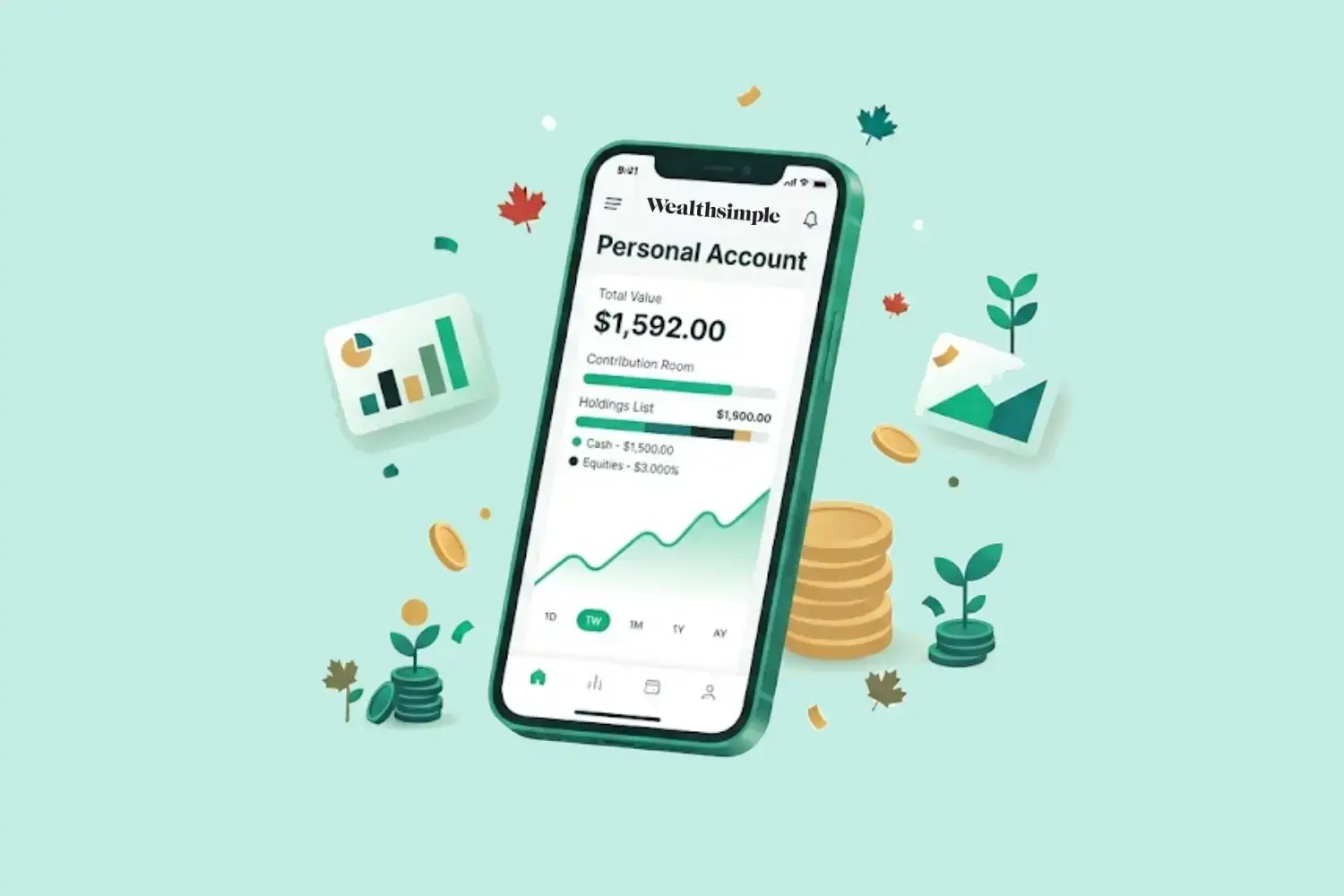
What a Personal account is
- No contribution limits, invest as much as you like, with none of the annual caps that apply to a TFSA, RRSP, or FHSA.
- No withdrawal restrictions, take your money out anytime without penalties or lost contribution room.
- Commission-free, trade Canadian and US stocks and ETFs for $0, with no account minimum.
- Fully taxable, you report investment income each year, which is the one real downside versus a registered account.
Why use a non-registered account
The Personal account is what you reach for when registered room runs out or doesn't fit the goal:
- You've already maxed your TFSA, RRSP, and FHSA and still have money to invest.
- You want complete flexibility, unlimited deposits and withdrawals with no rules to track.
- You're investing toward a goal that doesn't suit a registered account's restrictions.
- You want to hold investments that don't belong in (or aren't allowed in) a registered plan.
How it's taxed
You're taxed only on income you actually realize, and different income types are treated differently, generally in your favour:
| Income type | How it's taxed |
|---|---|
| Capital gains | Only 50% of the gain is taxable, and only when you sell |
| Eligible Canadian dividends | Reduced rate via the dividend tax credit |
| Interest | Taxed at your full marginal rate |
Because capital gains are only half-taxable and only when realized, a buy-and-hold ETF strategy in a non-registered account can still be quite tax-efficient. This page is a plain-English summary, not tax advice, confirm your situation with a professional.
Self-directed or managed
You can run a Personal account two ways. Self-directed lets you pick your own commission-free stocks and ETFs. Managed hands the work to Wealthsimple's automated portfolios, which build and rebalance a diversified mix matched to your risk level. Both carry the same $0 trading commissions; the managed option adds a small management fee. See our full Wealthsimple review for the details.
Individual vs joint
Wealthsimple offers the Personal account as either an individual or a joint account. A joint non-registered account is useful for couples investing shared money toward a common goal, a renovation, a wedding, a future property, without the contribution limits of a registered plan.
Where it fits in your plan
For most Canadians the order is: fill tax-advantaged accounts first, then use the Personal account for the overflow. Start with a TFSA for flexible tax-free growth, add an RRSP for the deduction (especially at higher incomes), use an FHSA if you're buying a first home and an RESP for a child's education, then invest anything beyond that in a Personal account.
How to open a Wealthsimple Personal account
- Open wealthsimple.com/invite/_Y024Q to attach referral code _Y024Q.
- Create your account and verify your identity with photo ID and your SIN.
- Select Personal (non-registered), and choose individual or joint.
- Deposit at least $100 from an external bank within 30 days.
- Your $25 bonus lands in your Cash account within 24 hours of the deposit settling.
Open a flexible investing account with a free $25.
Open a Personal account with code _Y024QClaiming the $25 bonus
The Personal account fully qualifies for the welcome bonus. Sign up with code _Y024Q, deposit at least $100 within 30 days, and your $25 lands in your Cash account, separate from your investments, so it has no tax or contribution implications.
Wealthsimple Personal account questions
Common questions about non-registered investing and the $25 bonus.